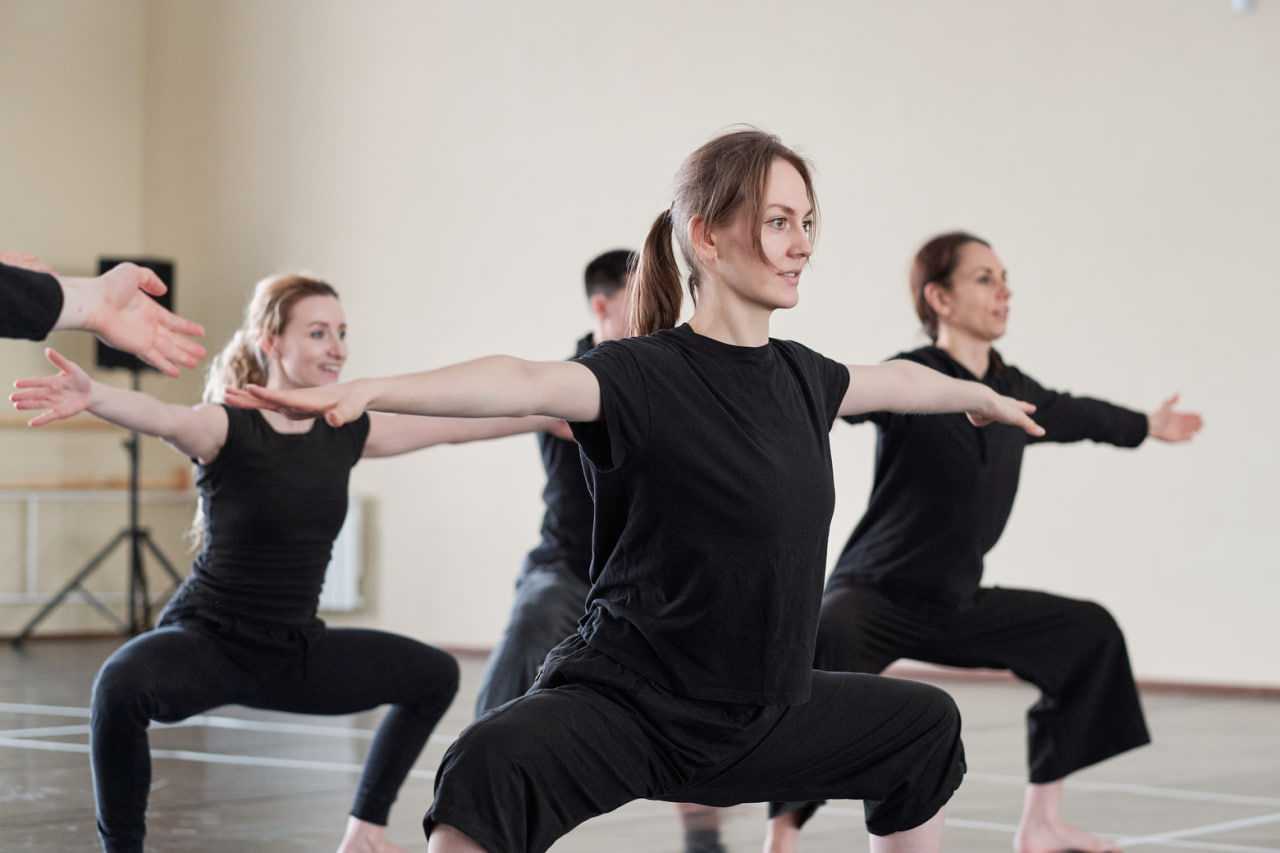
The Definition of Musicality in Dance
Being musical is being able to understand, internalize, and then use the music to influence your dance movement. That is more than keeping the beat. It is about feeling the music, understanding its composition, identifying the emotional nuances of the song, and turning the music into purposeful movement.
A dancer with good musicality doesn’t seem to dance over the music, they seem to dance in the music. The way they move appears connected to the rhythm, accents, melody, and dynamics in a way that looks and feels intuitive and engaging. It makes the choreography feel like an interpretation of the music, rather than a set of moves.
Rhythm and timing are concepts that you need to master. An essential principle of all communication is the importance of properly timing when you say what. Failing to consider timing can make even the most well-intentioned statement seem inappropriate or awkward, regardless of whether it’s funny or serious. Learning to gauge reactions and feel the moment to deliver your best material is key to this skill.
Rhythm awareness is the foundation of musicality. Most music is counted, usually in phrases of 8. Understanding this is what allows dancers to ‘hear’ what’s coming and dance on beat.
But, beyond counting, you must feel the beat inside. Do simple rhythm work like clapping rhythms, stepping through the movements without full execution, or focusing on moving different body parts on different counts to refine your timing.
There are times when a dancer needs to move off-beat as well. Syncopation, hesitations and late accents also create more interesting choreography and provide less predictability. If a dancer can think to themselves, “I have the option to move before, on or after the beat”, then they have musical control.
The Rhythm of Understanding
Often times, dancers will only pay attention to the main rhythm. Music has multiple parts: There is the drums, the bass, the melody, the harmony, and even tiny nuances in the background. There is a lot to play with.
e.g. crisp percussive sounds might motivate sharp, clipped movements, while a long-held vocal tone might elicit smooth, flowing gestures. Dancers can add to their vocabulary by listening to every part of the music.
Another tool for practice is to listen to a piece several times without dancing. The first time, listen for rhythm. The second time, listen for musical phrases. The third time, listen for dynamics. This kind of listening will hone your interpretation skills.
Dymanics: Energy and Intensity
There is always fluctuation in music. Music swells and recedes, rises and falls. To be powerfully musical, you should match the quality of your movement to these dynamics.
When the music gets stronger, I might move my body in heavier, more forceful ways. When the music quiets, I might move more softly or carefully. When I fail to notice these changes, there is a sense of separation from the music.
It might also be useful to practice choreography at different energy levels. Do the same phrase at full force and then again with some reserve. This will help you become more conscious of dynamic decisions.
With accents and highlights
Accents are musical elements where notes are stressed more than others; think loud kicks, drums, and big shouting vocal moments. Bumping these accents with motion makes them visible.
Stops, sharp directions, plummets, isolations, and even holdings can create accents.
Exactness is the main goal. If you’re off by even a few frames, the impact isn’t as strong. Consistent practice with a concentrated emphasis on timing will help tighten the movements and get you comfortable.
Interpreting through Emotion
Music conveys emotional content. It might be happy, sad, angry, calm, etc. Musicality is about expressing the emotional character truthfully.
The next thing I like to take into account before starting to choreograph, is how the song makes me feel. I will often ask myself, what message do I get from this piece of music? What kind of environment does this song evoke? What do I see when I hear this song?
Because emotion affects your posture, facial expression, breathing, and quality of movement, conveying emotion makes a dancer more engaging to watch and leaves a lasting impression on an audience.
Breath and Flow
Breathing is another component of musicality that is often neglected. Music has a natural ebb and flow, not dissimilar to breathing. When you breathe with your movement, you will find it easier to be smooth and controlled.
Breathing longer for long phrases, shorter for strong accents, and being aware of breathing will help prevent rigidity and improve endurance.
Perform choreography with the attention of aligning breath with musical phrasing to improve performance.
The role of rest in a musical composition
Even silence speaks. Intermittent breaks or lulls between, or with limited instrumentation are great areas for creative diversity.
Rather than being constantly active, there is the possibility for dancers to incorporate moments of stillness. A contained moment of stillness can create suspense and draw further attention to the upcoming gesture.
Understanding the value of silence keeps choreography from being too busy.
Drills to Develop Musicality
Musicality is a skill that needs to be practiced. Add these exercises to your training:
Now dance that same combination to three different songs that have different tempos and feels.
Create a short phrase that is in response to the melodic instruments instead of the percussive instruments.
Do an exercise in which you play a routine that accents only drum hits.
Improvise while reacting to changing volume levels.
Mark choreography without music, counting it out in your head. This will help improve your rhythmic memory.
These techniques improve listening and flexibility.
Keeping Yourself Out of Musicality Trouble
A mistake would be over-choreographing a piece and not allowing any room for interpretation. If someone choreographs a piece and every count is accounted for and does not incorporate musical phrasing into their work, the choreography may feel stifled.
Not accounting for tempo changes is another error. Music has an underlying tempo that can ebb and flow; if you don’t follow that flow, it will throw things off.
Third, dancers will depend on counting the music instead of feeling the music. Counting offers structure. Feeling the music offers emotion.
The transition from Practice to Performance is always a special moment for the CSO.
We practice structure in rehearsal. We practice timing in rehearsal. We should be able to take care of musicality before we perform and not think about it anymore. The more you think the more you hesitate.
Confidence is built through practice and familiarity. If the rhythm and the essence of a dance are felt within, the body will follow.